Kids' room and nursery lighting has a few jobs that grown-up rooms don't. It has to work at 3 a.m. with a baby in one arm. It has to help a bedtime routine wind down, keep the dark friendly for a child who isn't sure about it, and get a sleepy five-year-old to the bathroom and back. None of that needs bright light. It needs a few small, warm lights in the right places.
Nursery lighting for night feeds and changes
At a night feed you want enough light to see a bottle, a latch or a diaper tab, and no more. A low, warm glow beside the chair or on the changing-table shelf does that without lighting the whole room.
The test that matters is simple: can you turn it on with one hand, without looking? A touch light you can find with a knuckle passes. A switch on a cord behind the dresser doesn't.
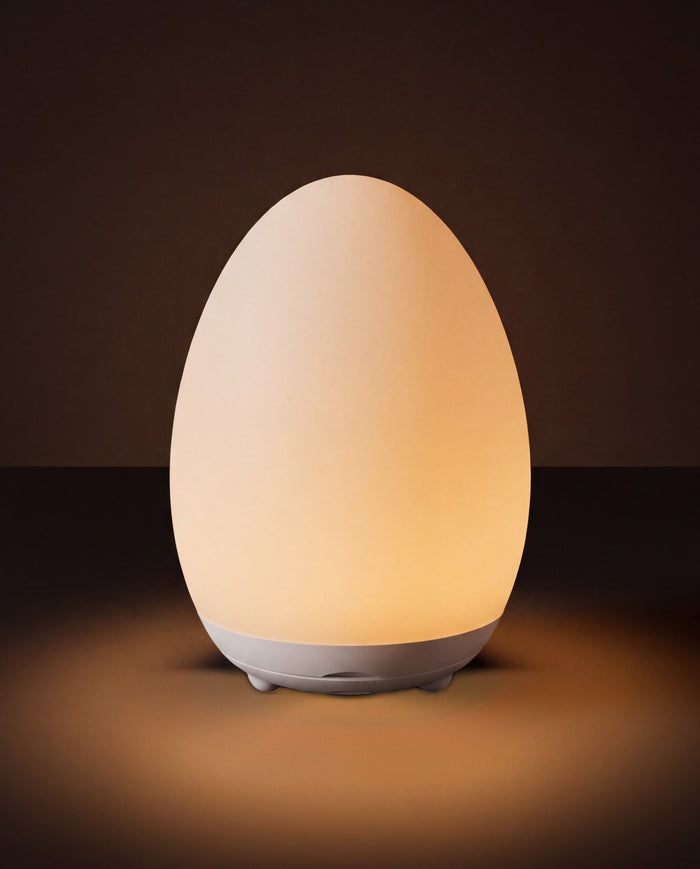
- Cradle – Nursery Egg Night Light: one touch turns it on or off, and its stepless dimming remembers your last brightness, so it comes back at the same low level every night. It has a warm white setting alongside seven colors, a soft silicone body, and runs up to 100 hours per charge.
- Perch – Astronaut Ring Night Light, Rechargeable with 3 Light Modes: hold the touch spot on the base for about 1.5 seconds to switch it on, then touch the base to step through four brightness levels. Choose the warm setting for feeds.

A bedtime routine where the lights go down with it
Let the lights go down as the routine goes on, each step a little dimmer than the last. Children soon learn what each one means, and many people find warm, low light easier to wind down with.
- After bath: overhead off, one table lamp or wall light on.
- Stories: one warm lamp near the bed, dimmed a little as the book goes on.
- Lights out: the lamp off, the night light on at its lowest setting.
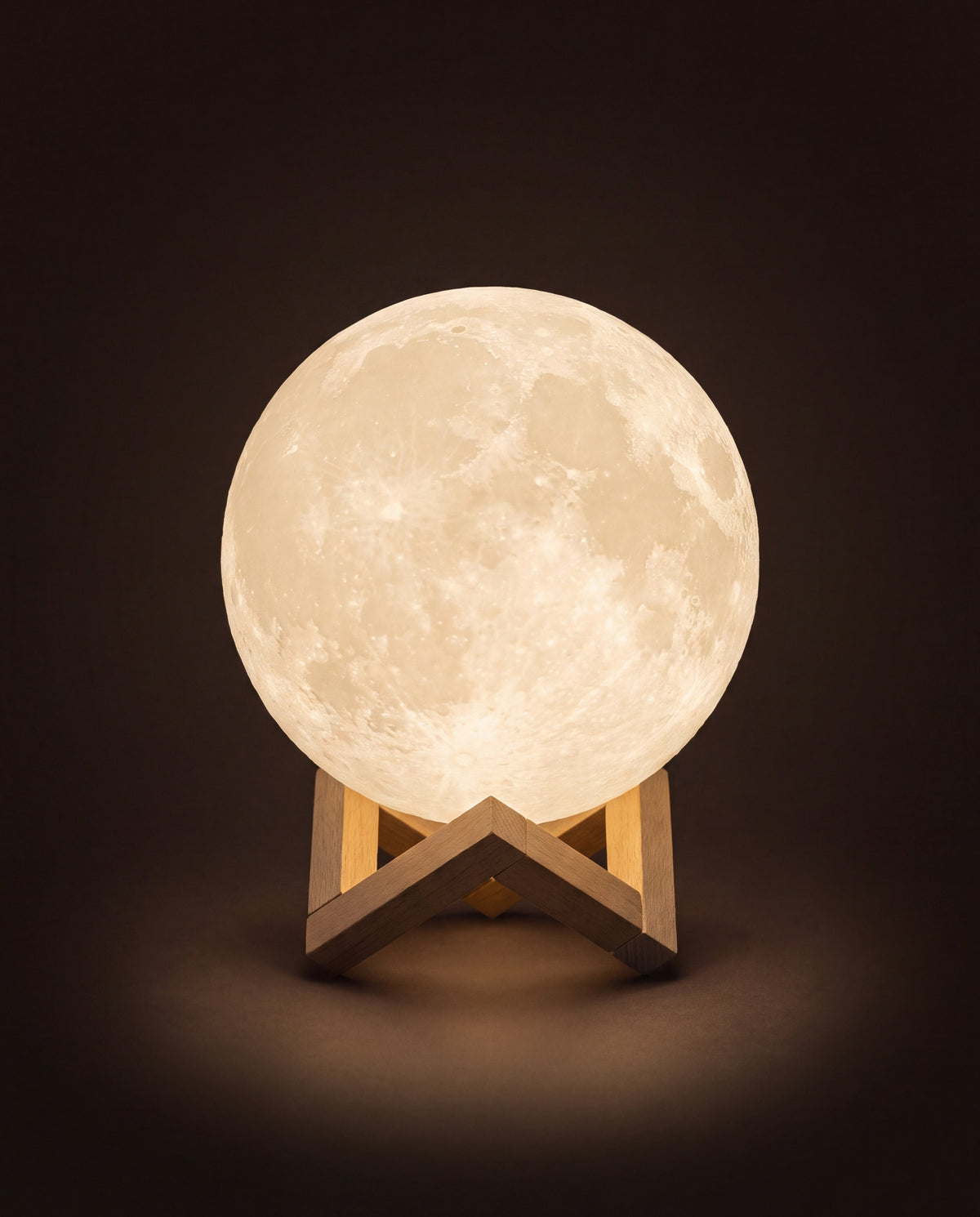
Harvest – Moon Lamp suits the story step. It's a 15 cm (5.9 in) moon on a wooden stand that switches between warm white and white, dims when you press and hold the touch switch, and runs about 6 to 12 hours per charge, depending on brightness.
Night lights for kids who don't like the dark
A child who is uneasy in the dark usually doesn't want a bright room. They want to see the shape of things, and they want some say in it.
- Keep it low and warm. A soft glow on a shelf is plenty for seeing the door and the toy box.
- Let them choose. A light they picked themselves, an astronaut or a moon, feels like company rather than a fix.
- Put it where they can see it from bed. On a shelf or dresser, never in the crib or bed.
Perch's small spaceman in his glowing ring suits this job well. With Cradle, picking a color can be part of bedtime before you settle on warm white for the night.
Star and galaxy projectors
A ceiling full of stars can make lights-out something to look forward to. Projectors look best in a properly dark room, aimed at a plain ceiling. Check two things before you buy: how it's powered, and whether it switches itself off.
- Starfall – Galaxy Nebula Projector has an auto-off timer you can set to 1, 2 or 4 hours, so the stars can fade after your child is asleep. It runs from a USB-C cable.
- Twinkle – Mini Galaxy Night Light is two lights in one: tap once for a warm night light, twice for stars, and hold to dim. Its product page doesn't list a timer, so switch the stars off yourself, or leave the warm glow on. It runs from USB power.

For a tween or teen who has outgrown the stars, Solari – 16-Color Sunset Lamp washes a plain wall in sunset color, with 16 colors on the included remote. It's USB powered and works from the floor or a low shelf.
A path light to the bathroom
Once a child is out of the crib, night trips to the bathroom begin. A motion-sensor light along the way means nobody has to hunt for a switch half asleep.
- Wayfinder – Walnut Sensor Night Light lights for 15 seconds when it senses movement within about 4 m, across 120°. The light is warm white, 2700–3000K, and in auto mode it won't light up in a bright room. A switch on the back sets it to always on, auto or off.
- Lookout – Motion Sensor Night Light senses movement within 3 meters across 120° and goes off after about 20 seconds. Choose the warm white panel for nighttime. It lifts off its magnetic base to use as a flashlight, which older kids tend to enjoy.
Put the first light where your child's feet meet the floor and a second near the bathroom door. Mount them low enough to light the floor and, in a home with toddlers, high enough that small hands can't pull them off.

Safety, in plain terms
General good habits for any light in a child's room:
- Cords and chargers out of reach. Keep cables, plugs and USB chargers away from the crib and out of reach of small hands. A USB-powered projector belongs on a high shelf or dresser, with the cable run along the wall or behind furniture.
- Nothing that can be pulled into the crib. Keep lamps, projectors and their cables well back from the crib, so nothing can be reached through or over the rails.
- Magnets and small parts away from small children. Some lights use magnets or have parts that come off. The Nocturne – Floating Moon Lamp and other magnetic lamps are for older kids and grown-ups, or for a shelf well out of reach.
- Skip button batteries for young children. Avoid lights and remotes that run on button or coin batteries in a young child's room, and keep spare batteries out of reach.
- A grown-up keeps the charging cable. Charge rechargeable lights where an adult can see them, then bring the light back without the cable.